

MEDICALNET FERTILITY
A specialized laboratory
We provide state-of-the-art space to physicians helping patients on their journey to becoming parents.


Embryo transfer
Embryo transfer consists of depositing the embryos generated in the laboratory in the mother's uterus while waiting for them to implant and give rise to a pregnancy. It is a simple and painless process that does not require anesthesia.

Eggs freezing
Egg freezing, also called cryopreservation of mature oocytes, is a method to preserve the reproductive potential of women for the future. The eggs that are removed from the ovaries are frozen without fertilizing and stored for future use.

Embryo freezing
Embryo freezing is a procedure used in fertility treatments through which embryos are cryopreserved by the vitrification method. The embryos are stored in a freezer until the woman is ready to start treatment to get pregnant.

Management of semen samples
Semen quality, or sperm quality, is a measure of male fertility, which is intended to measure the ability of sperm to achieve fertilization. It refers to both quantity and quality.
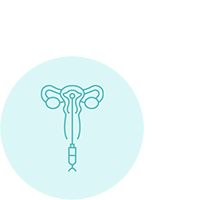
Intrauterine insemination (IUI)
Intrauterine insemination involves putting sperm directly into the uterus while you are ovulating, which helps the sperm get closer to the egg. This reduces the time and distance the sperm must travel, making it easier to fertilize the egg.

Test ERA
It is an endometrial receptivity test, or ERA for its acronym in English of Endometrial Receptivity Analysis. It is a molecular diagnostic test used to determine the receptivity status of the endometrium.

Preimplantation genetic study
Preimplantation genetic diagnosis (PGD) is the study of chromosomal and genetic alterations in the embryo, before its transfer to the mother. It allows knowing those embryos free of chromosomal abnormalities or genetic mutations. It is recommended when the patient has had multiple miscarriages or previous treatment failures.

Freezing of testicular biopsy samples
Processing of TESE (Testicular Sperm Extraction) samples can be carried out for therapeutic reasons: extract immature sperm, if any, for use in assisted reproduction and freezing of a reserve sample for later reproduction cycles or when there is a pathology that would imply treatment with chemotherapy or radiology.
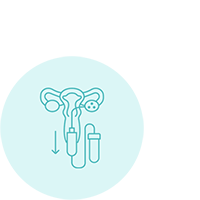
Follicular aspiration
Follicular aspiration is an outpatient procedure that aims to extract the oocytes from inside the follicles. To visualize the ovaries and follicles, which are the ones that contain the oocytes, a transvaginal sonograph is used. Using a long, fine needle, each ovary is punctured through the vagina and the contents of the follicle are aspirated.
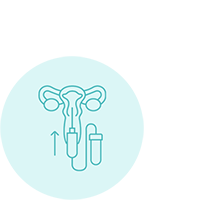
In Vitro Fertilization (IVF/IVF)
In vitro fertilization is a highly complex assisted reproduction treatment. It consists of the union of the ovule with a sperm in the laboratory -in vitro-, in order to obtain good quality embryos that can, after their transfer to the mother's uterus, give rise to a pregnancy.

Sperm microinjection (ICSI)
Sperm microinjection consists of the selection of a single sperm. The extraction is done with a glass micropipette (borosilicate) and then the sperm is introduced into an egg to force fertilization. This technique is also known by the name of ICSI, an acronym for intra-cytoplasmic sperm injection.

Freezing of semen samples
The freezing of seminal samples consists of cooling and preserving the semen in liquid nitrogen (at -196ºC) so that it can be stored without a time limit. To do this, the patient must deliver the semen sample to the laboratory within one hour after ejaculation and under the conditions indicated by the laboratory.
Meet
Our Team
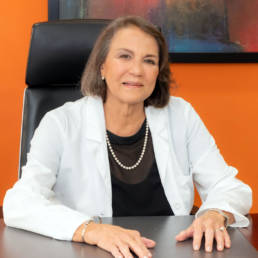
Dra. Tamara Frankenberg
He has been in private practice since 1984 and has more than 12 years in the area of fertility and assisted reproduction.
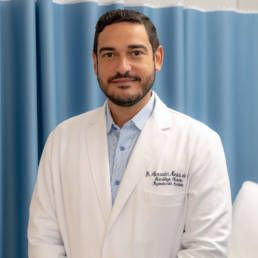
Dr. Alexander I. Montes de Oca
Specialist in Assisted Reproduction Techniques. Graduated from the School of Medicine of the Technological Institute of Santo Domingo (INTEC) 2002.

Ms. Claire Christina Machado
Graduated from Florida International University, Miami, Fl. USA. With more than 7 years working in IRECEF.
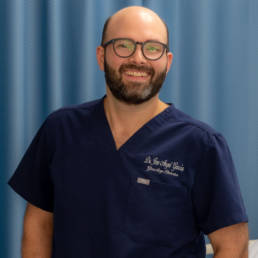
Dr. José Angel García Fernández
Specialist in Assisted Reproduction Techniques. Doctor of Medicine at the Technological Institute of Santo Domingo (INTEC 2003)
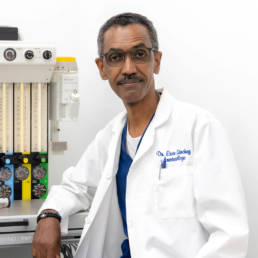
Dr. Ervin A. Sánchez Prenza
Dr. Ervin A. Sánchez Prenza Graduated from the Technological Institute of Santo Domingo (INTEC), with more than 30 years of experience in the area.
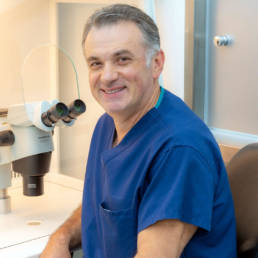
Dr. Nathan Katz, MD, PhD
Dr. Nathan Katz, MD, PhD is a pioneer in the field of clinical reproductive embryology with more than 30 years of experience in the field.